

Automate chain-of-custody data entry for environmental labs
Turn handwritten and typed chain-of-custody forms into validated LIMS records. AutoForge AI reads every field and checks it against your lab's standard operating procedures. Runs today as a background service inside Prisma LIMS. A qualified analyst approves every record.
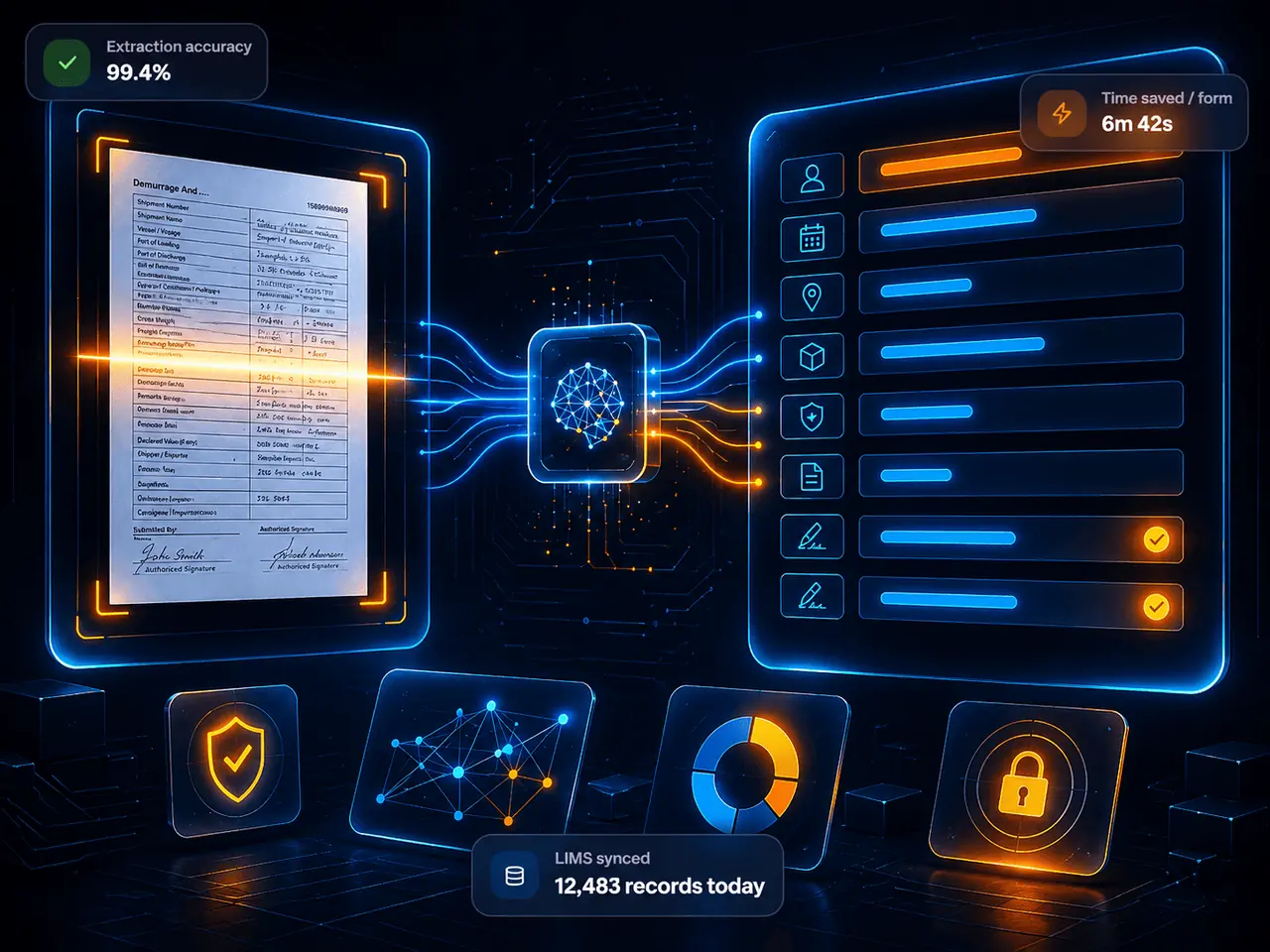
Built for accuracy.
Engineered for compliance.
Only the right people can see or edit forms, with secure logins and approvals, and a qualified analyst approves every record. Private hosted or on-premises: your data never goes to shared AI services.
What these figures cover and what they do not: evidence and methodology notes.

AutoForge AI is a member of the NVIDIA Inception program.
No new app for your
data-entry team.
In Prisma LIMS, AutoForge runs as a background service: Prisma sends the scanned form, and the data-entry person reviews the prefilled order in the Prisma screens they already use. Prisma LIMS is the only LIMS connected this way today. Labs on other LIMS use the AutoForge app and export approved records as CSV.
The LIMS sends the form
The scanned chain-of-custody form goes from the LIMS to AutoForge.
AutoForge reads and checks it
Every field is read and checked against your standard operating procedures.
A prefilled record comes back
Your data-entry person reviews it in the LIMS screens they already use.
Four steps from paper to LIMS.
A continuous workflow that removes manual retyping without ripping out any of your existing systems.
Upload or scan
Upload a whole delivery at once, a single form, or a phone photo.
AI extracts
Our system reads handwritten and typed information automatically, field by field.
Validate & review
Validation rules mirror your standard operating procedures. Review and edit at every stage before it goes to LIMS.
Push into LIMS
Final records go straight into your LIMS with the full custody history saved in the system.
Chain-of-custody automation, answered.
Short answers to what lab directors and sample-receiving teams ask first. Each one links to the page that covers it in depth.
- What is chain-of-custody form automation?
- Software reads the chain-of-custody form, checks each record against your standard operating procedures, and prefills the LIMS record, so your team reviews instead of retyping. Manual entry typically takes 2-10 minutes per new order; machine processing takes as little as 20 seconds per form, depending on computing power.Environmental lab intake automation
- Which LIMS does AutoForge integrate with?
- Today, Prisma LIMS: AutoForge runs as a background service inside it. Labs on other LIMS use the AutoForge app and export approved records as CSV.LIMS integration
- Can it read handwritten chain-of-custody forms?
- Yes. About 95% of handwritten fields were read correctly before review, measured on real forms in October 2026 (about 97% on clean scans). Fields worth a second look are flagged for the reviewer.Chain-of-custody data extraction
- Does a person still review every record?
- Yes. A qualified analyst approves every record before it reaches your LIMS, and every correction is recorded: what the AI read, what was approved, who and when.How human review fits automated intake
- Will it work on our own forms?
- AutoForge uses custom models trained on your forms and your standard operating procedures, so it is set up for your lab's own layout rather than a generic template.What to check before automating
- Where does our data go?
- AutoForge can be private hosted or run on-premises. Your data never goes to shared AI services.Security and deployment
Explore the workflow
- Environmental lab intake automation
How AutoForge fits sample receiving and reduces retyping.
- Chain-of-custody data extraction
How handwritten and typed fields are extracted, checked and reviewed.
- LIMS integration
How information moves between AutoForge and your LIMS.
- Security and deployment
What private-hosted and on-premises mean, and who can access records.
- Product demo
The workflow from scanned form to approved record.
- Resources
Practical guides for lab managers and LIMS decision-makers.